Mid-market ERP providers have long relied on a highly predictable lead-generation engine: businesses outgrowing QuickBooks. During its Q1 2026 earnings call, Sage revealed just how lucrative this pipeline is, noting that a consistent 25% of new Sage Intacct users are explicitly “QuickBooks graduates.” For years, Intuit has watched its most successful, scaling customers defect to competitors like Sage, NetSuite, and Acumatica because traditional QuickBooks Enterprise—a fundamentally on-premise, inventory-focused tool—simply couldn’t handle complex financial needs.
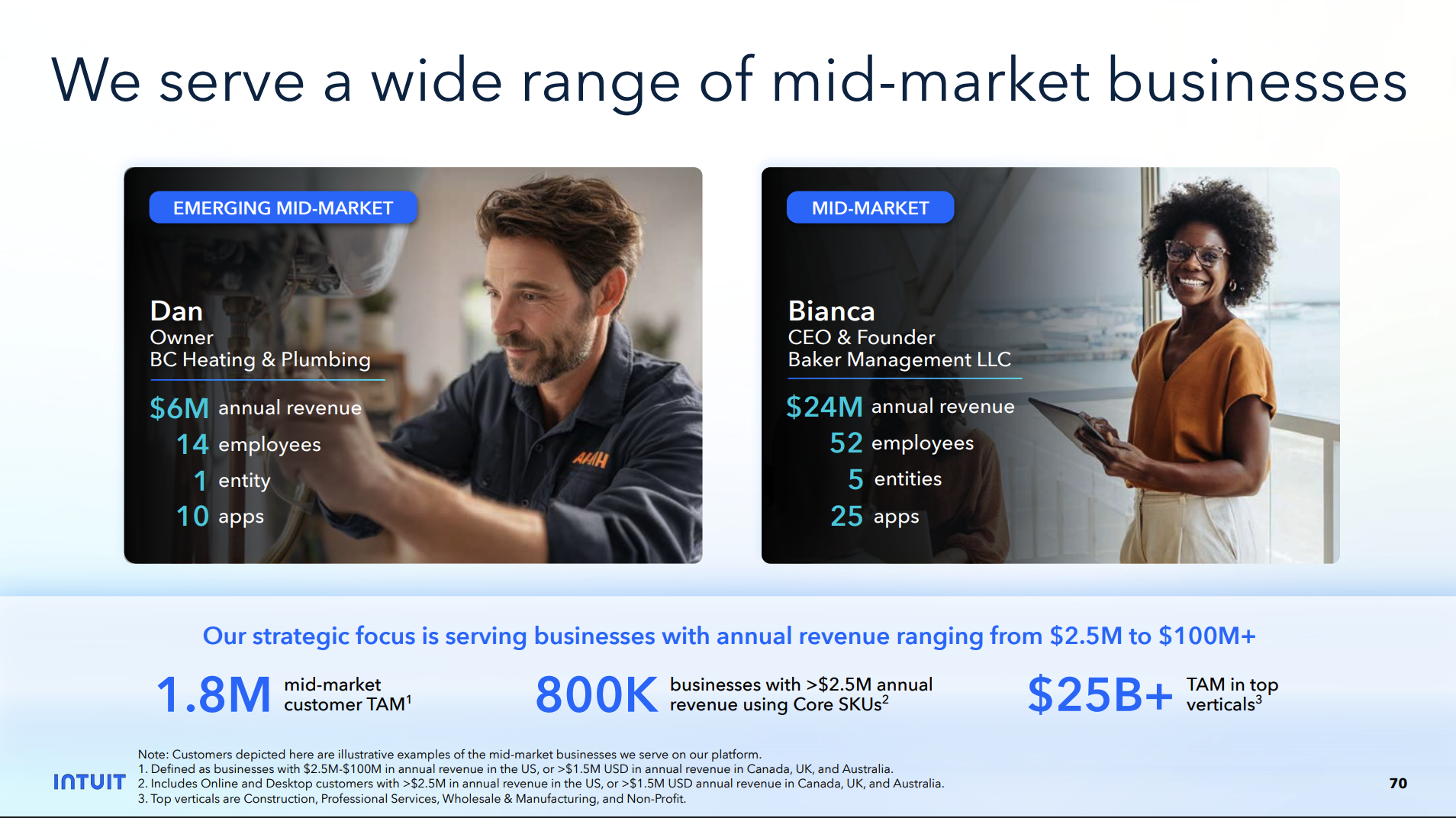
That era of easy poaching is ending with the arrival of Intuit Enterprise Suite (IES). Unlike its predecessors, IES is a fully cloud-native platform specifically engineered to bridge the mid-market gap for companies in the $10M–$100M+ revenue range. By offering robust multi-entity management, AI-driven CFO workflows, and rapid implementation times for roughly $12,000 a year, Intuit is aggressively building a wall to keep high-growth businesses safely inside its ecosystem and away from traditional, expensive ERP implementations.
However, great software still requires great sellers to move up-market, and Intuit is taking no chances. The company recently hired channel executive CJ Boguszewski—poached directly from Acumatica—to build out a premium mid-market partner strategy. For competing Value-Added Resellers (VARs), the writing is on the wall: Intuit is combining its massive built-in user base with serious channel muscle, transforming what used to be a reliable lead source into a formidable competitive threat.